
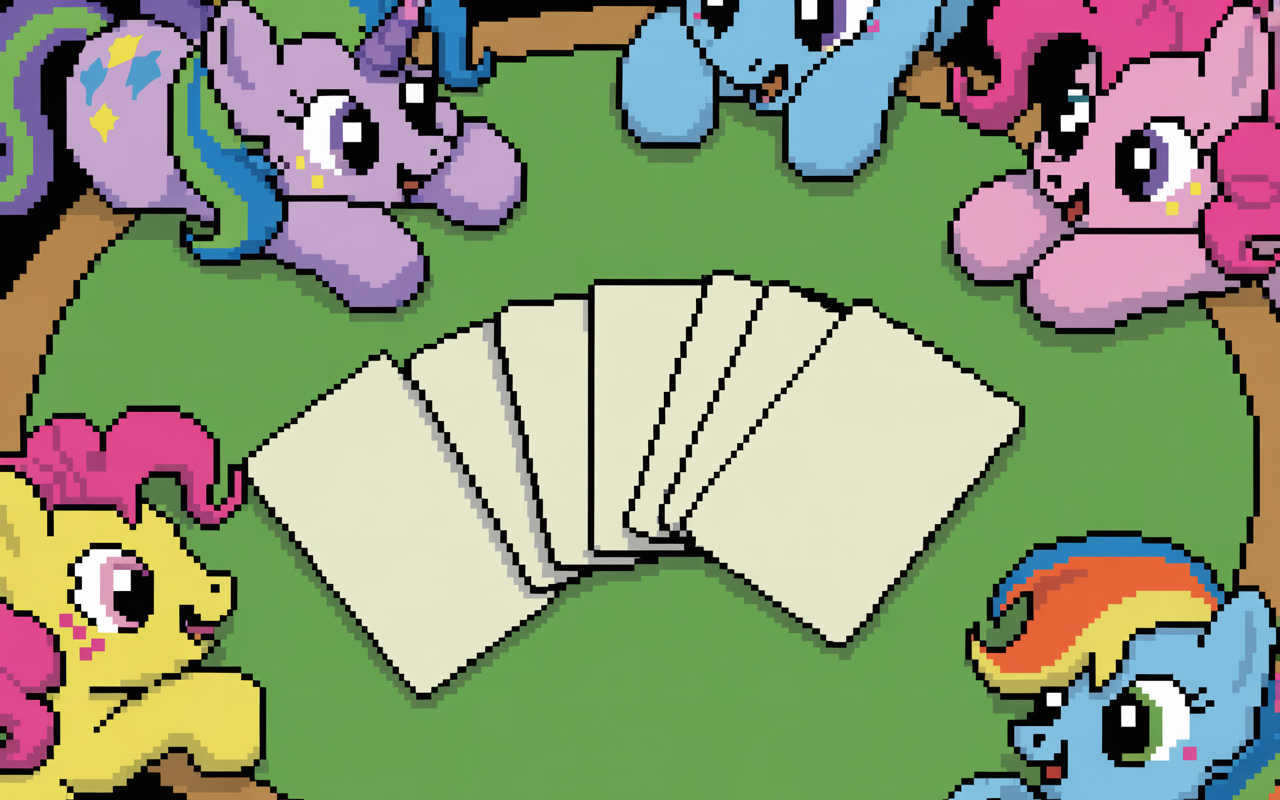
Kayou’s MLP TCG gets almost everything right: gorgeous cards, generous pull rates, and a format that rewards players of every skill level. Here’s why it’s winning fans — and the complete beginner’s guide to get you playing today.
Emma already knew every episode by heart. She could name every background pony, trace every friendship arc, and had spent years collecting figures, plushes, and art prints. When she heard that Kayou — the Chinese trading card company behind some of the most visually stunning TCGs in the world — had released an official My Little Pony Trading Card Game, she was the first in line.
She got two starter decks. She tore them open with shaking hands. And then she stopped.
The cards were breathtaking. Foil-stamped Twilight Sparkle looking majestic. Rainbow Dash mid-Rainboom. Pinkie Pie in a moment of pure, infectious joy. But what did “Force of Harmony” mean? What was a “Contact Phase”? Why did the instructions keep mentioning Plans, Scenes, and Retirement Areas?
Emma loved My Little Pony. Emma did not know what to do next.
She’s not alone. The Kayou MLP TCG is one of the most unique, genuinely elegant card games to hit shelves in years — but its rulebook assumes you already know how TCGs work. If you’ve never played Magic or Pokémon, you’re left staring at 70 beautiful cards with no map. That’s why Tier4 wrote one.
We sat down with every starter deck, every card, and the official Kayou Comprehensive Regulation document and built the guide we wish existed when Emma opened that first box. But first — we promised to prove something.
The case: five ways this game raises the bar
Pokémon TCG has been the entry point for a generation of card game players. It’s also developed some well-documented problems over the last decade: predatory pack economics, starter decks that can’t compete, mana variance that can end games before they start, and a complexity ceiling that’s quietly gotten very high. The Kayou MLP TCG, built from scratch in 2024, doesn’t have any of those problems.
No mana screw. In Pokémon, draw badly and you can lose before turn three. In the MLP TCG, you automatically flip a new Scene card — your resource — every single turn. Turn 1 you have 1. Turn 2 you have 2. No variance. No screw. Ever.
Starter decks that actually compete. Pokémon pre-built decks are deliberately weakened to sell upgrades. Every MLP TCG starter is fully competitive right out of the box. A well-played Twilight Sparkle deck will beat a badly-played collection of Gold Rares every time.
A win condition worth caring about. In Pokémon, you chip your opponent’s life to zero — same as it’s been for 30 years. In the MLP TCG, you complete your pony’s personal story. Twilight Sparkle finds the Elements of Harmony. Rainbow Dash lands her Sonic Rainboom. Every game is a 20–30 minute narrative where the stakes feel real.
Games that actually end. Competitive Pokémon games routinely run 45–60 minutes. MLP TCG games take 20–30 minutes — fast enough to play two in an evening, slow enough that every turn matters.
Design that respects the source material. When two characters face off in this game, the official term isn’t “battle.” It’s conversation. Twilight Sparkle’s ability gets stronger the more spells she’s studied. Applejack’s characters work harder when there’s more to do. The game design is the story. That’s not an accident.
This isn’t a nostalgia pitch. This is a mechanically superior game that happens to star ponies. The ponies are a feature, not a liability.
How to actually play
Each player picks a pony hero and builds a 70-card deck: a main deck of 50 characters, events, and items; a separate scene deck of 15 locations; a 4-card story deck representing your quest; and your main character card that tracks your progress.
You win by promoting your pony through four story stages. To promote, you need an uncontested lane — a spot on the field where your character stands with nobody across from them. But your opponent has placed four face-down Plan cards blocking each stage of your quest. You have to clear those Plans before you can advance.
Emma got that far in the instructions and stalled. The language was unfamiliar, the board layout wasn’t obvious, and the interaction between Scenes-as-mana and Scenes-as-combat-boosts wasn’t explained anywhere. That last part — which is the core strategic tension of the whole game — deserved its own section.
So here it is: every location card (Golden Oak Library, Cloudominium, Sweet Apple Acres) does two things. You can tap it to pay for cards in your hand — or you can flip it face-down during a confrontation to boost your character’s power. But once you use it as a boost, it can’t boost again. Every turn, every Scene, you’re making a choice: more cards now, or more power in the fight?
Every turn follows a simple rhythm: wake up your cards, draw one, flip a new Scene for resources, play your characters and spells, then resolve the Contact Phase where every lane gets its moment. It sounds like a lot. After one game, it feels like breathing.
Which pony fits you?
The Friendships Begin set launches with six pre-built decks, each centered on one of the Mane 6.
Twilight Sparkle is the control deck. She draws cards, fills her hand with spells, and gets stronger the more prepared she is. Best for players who love thinking three turns ahead.
Fluttershy is the defensive grind deck. She builds a growing team of pets — Angel, Tortoise, Philomena — that gets tougher on your opponent’s turn than on yours. Best for patient players who win by outlasting.
Pinkie Pie is the chaos deck. She stacks items on her characters — Goofy Glasses make her literally unkillable in combat and wins before her opponent figures out what happened. Best for players who enjoy surprises, giving and receiving.
Applejack is the efficiency deck. Her characters untap your resources mid-turn, letting you consistently play more cards than your opponent thinks you can afford. Best for players who love squeezing value from every card.
Rainbow Dash is the aggression deck. She removes opposing characters outright, clears lanes, and races through her story quest before anyone can catch up. Best for players who want to go fast and go first.
Rarity is the recycling deck. When her characters retire, they give you cards and resources back. Losing characters is part of her strategy. Best for players who love a comeback arc.
For Emma, and everyone like her
Emma eventually figured it out. And when the rules clicked — when she played her first Contact Phase, cleared her first Plan, and watched Twilight Sparkle advance to Stage I — she sent one message:
“Oh. OH. This is incredible.”
That is exactly the response this game deserves. The MLP TCG is beautifully designed, thematically rich, and more accessible at entry level than any TCG currently in print. It deserves a bigger audience. Tier4 is going to help build one.
The complete guide — every rule explained from scratch, every starter deck list verified card-for-card, a full turn-by-turn walkthrough of a real game, and a complete TCG-player translation appendix is live now below.
Whether you’re Emma, or you know an Emma, or you’ve always been curious about card games but never found a way in that felt like yours: this is your door.
It’s always been about friendship. Turns out it’s also a really good card game.
Frequently Asked Questions
What is the Kayou My Little Pony card game?
The Kayou My Little Pony Trading Card Game is an official TCG produced by Kayou, a Chinese card company known for visually stunning collectibles. It features foil-stamped character cards, generous pull rates, and a unique gameplay system with mechanics like Force of Harmony, Contact Phases, and Retirement Areas that differ from traditional TCGs like Pokémon or Magic.
Is the My Little Pony card game official?
Yes, the Kayou My Little Pony Trading Card Game is officially licensed and produced by Kayou, the same Chinese company behind other high-quality anime and franchise TCGs. The cards feature authentic My Little Pony characters like Twilight Sparkle, Rainbow Dash, and Pinkie Pie with official artwork and foil stamping approved by the license holders.
How do you play the Kayou My Little Pony card game?
The Kayou MLP TCG uses unique mechanics including Force of Harmony points, Contact Phases for card interactions, Plans for strategic moves, Scenes for location effects, and a Retirement Area for used cards. The game rewards players of every skill level and comes with starter decks, though the rulebook assumes prior TCG experience and can be challenging for complete beginners.
Are Kayou My Little Pony cards worth collecting?
Kayou My Little Pony cards are considered highly collectible due to their gorgeous foil-stamped artwork, generous pull rates compared to other TCGs, and visual quality that Kayou is known for. The cards feature detailed character moments like Rainbow Dash mid-Rainboom and majestic depictions of Twilight Sparkle, making them appealing to both players and MLP collectors who value premium card aesthetics.