
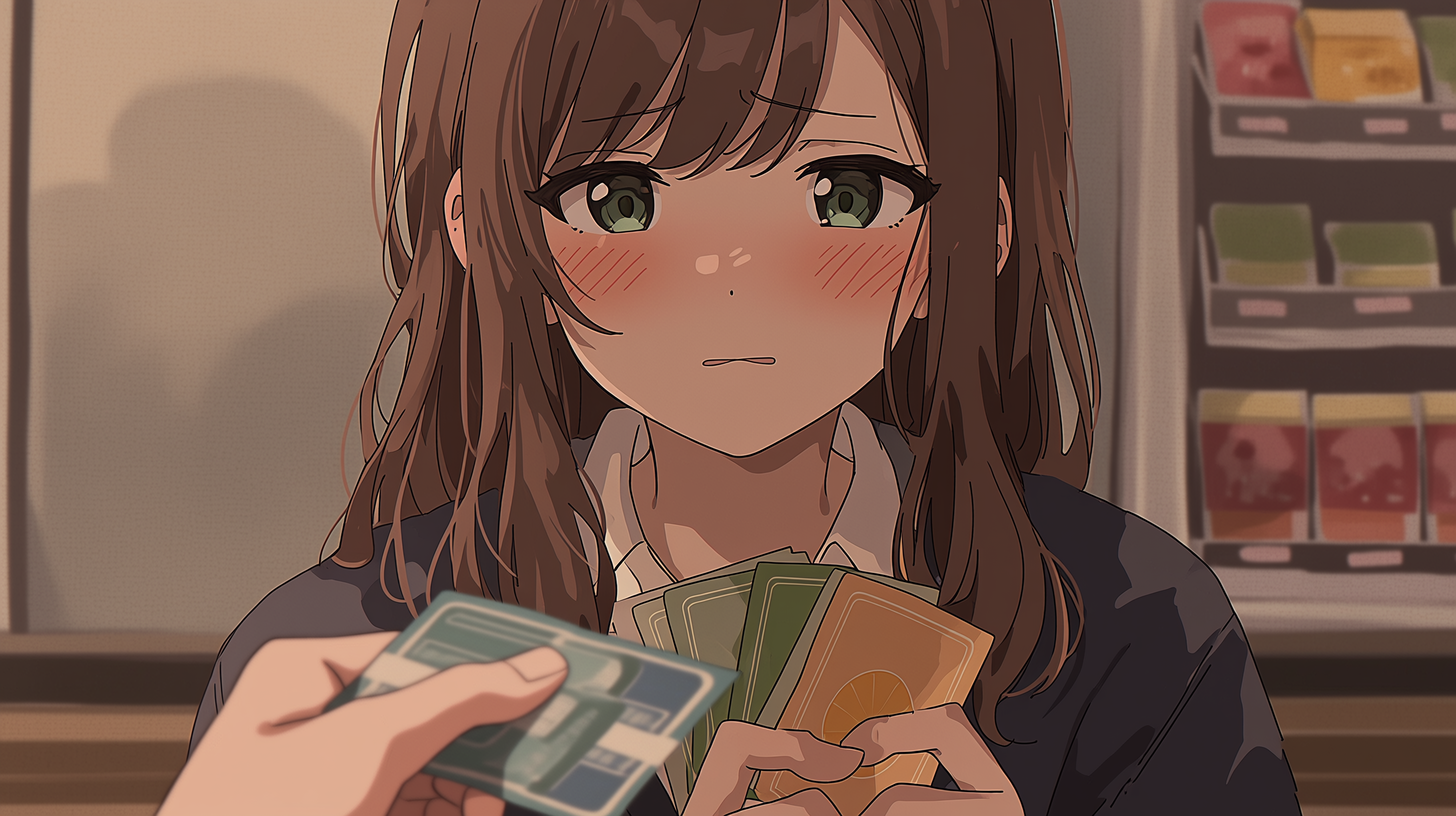
There’s a moment that happens at local game stores across the country, so consistently it might as well be scripted.
An adult walks in — late twenties, thirties, maybe older. They drift toward whatever wall holds the nostalgia product. They see My Little Pony. Or Naruto. Or Pokémon. Something crosses their face — recognition, then something more complicated.
Then one of two things happens. They move on, or they pick up a pack.
The ones who pick up the pack almost always apologize for it.
“My daughter used to watch this.” “I haven’t thought about this since I was a kid.”
They shouldn’t have to apologize. And the reason trading cards specifically are the thing that breaks through whatever holds them back — that’s one of the most underexplored ideas in the hobby.
The Rule Nobody Said Out Loud
At some point, most of us absorbed a rule that nobody stated directly.
Childhood is for loving things freely and obviously. Adulthood is for loving things with justification.
You can love vintage watches because of the mechanical craft. You can love a $400 pair of sneakers because they represent a cultural moment. Both are acceptable adult loves because they come with a story that sounds serious.
But loving My Little Pony at 35? Loving Naruto at 40?
That requires an explanation. And if you can’t produce one on demand, the default assumption is that there’s something a little arrested about it.
This is nonsense. The things we loved as children formed us. Pretending otherwise doesn’t make you more mature — it just makes you more disconnected from your own history.
But the social pressure is real. And most adult-aimed collectibles don’t resolve it. A $600 resin statue of a character from a children’s cartoon is harder to explain than the love itself.
What a Trading Card Does Differently
A trading card hands you a cover story.
Not the story of the fandom — you already have that. The story of this card. How you got it. What it cost you to find it. What you had to open before it appeared.
When you pull a holographic character card — gold foil stamped, the highest rarity tier, the one that surfaces after pack after pack — you didn’t find a piece of merchandise. You completed a hunt. You participated in a system with real stakes, and you were rewarded with something scarce.
That’s not a child’s activity. That’s what adults do with wine, with rare books, with anything worth collecting. You learn the hierarchy, you understand what’s valuable and why, and when you find it, the finding matters.
The card gives you a reason to love the fandom that sounds — and genuinely is — adult. You’re not a 38-year-old who never got over a cartoon. You’re a collector who understands rarity tiers and print runs, who pulled a specific card that most collectors will never hold.
Watch How the Language ChangeS
Someone who bought a My Little Pony plush will say: “I just really like Rarity.” Emotionally honest. A little vulnerable.
Someone who pulled a Rarity from a premium set will say: “I’ve been chasing this for three boxes. It’s the hardest pull in the series. The cold foil bleeds at the edges where the stamping overlaps the background.”
The love is identical. The language is different. And the language matters — because it signals that this person has invested not just emotionally but intellectually. They’ve done the work of understanding what they have.
That work is the cover story. It purchases social legitimacy that the raw love alone doesn’t.
Why the Product Has to Hold UP
The cover story only works if the card itself commands respect.
When someone asks what you’re chasing, and you pull out a high-rarity card and hand it over, the product does the work. The printing is flawless. The foil catches light in ways you don’t expect. It feels dense in your hand. It looks like something that belongs in a sleeve, behind glass.
That physical quality validates the collector’s investment after the fact. It says: of course you care about this. Look at what it is.
The cover story is only useful if the thing being covered is worth doing. The best products in this space — the ones driving genuine adult collecting behavior — make it worth doing.
What This Looks Like on the Floor
Walk into any good local game store on a busy weekend and you’ll see a version of this play out.
A parent comes in with their kid to buy Pokémon. Barely paying attention, checking their phone. Then they see a Naruto display. They know every character because they grew up with the show.
“Do they have the one with the hokage on it?”
That’s the moment. They just revealed they know enough to have a preference. From there the conversation goes somewhere real — the set structure, what’s worth chasing, what a good pull looks like.
By the time they leave, they’re not the parent who came in for their kid’s cards. They’re a collector who happens to have a kid.
It happens with Pokémon, with Naruto, and especially with My Little Pony — a fandom with a generation of fans who watched it between the ages of 7 and 14 and spent the next decade quietly embarrassed about how much they loved it. The right product gave them somewhere to put that love.
The data backs up how deep that love runs. On Xiaohongshu — China’s Instagram — the hashtag #MyLittlePony has 10.75 billion views. More than LABUBU, the biggest toy trend of 2024, backed by global celebrity endorsements and a $40 billion company. That number didn’t come from children. It came from adults who finally had a cover story good enough to let them care out loud.
For the Adults Who Put the Pack Back Down
If you’ve walked into a local game store and picked up a pack of something that made you feel something — and then put it back because you couldn’t figure out how to justify it — this is for you.
You don’t need a justification that sounds serious. The love is serious enough. But if you want one: the card you’re holding was printed on equipment precise enough to win international awards. The rarity system was refined by the largest trading card market in the world. The community runs deeper than it looks from the outside.
You’re not regressing. You’re investing.
Pick the pack up. See what’s inside.
Frequently Asked Questions
Why do adults apologize for buying trading cards?
Adults often apologize for buying trading cards because they’ve internalized an unspoken rule that childhood interests need justification in adulthood. Unlike craft beer or vintage watches that have accepted adult narratives, nostalgia-driven purchases like My Little Pony or Naruto cards lack culturally approved justifications. Trading cards break through this barrier by triggering genuine emotional connections that override social conditioning about age-appropriate interests.
What makes trading cards different from other collectibles?
Trading cards uniquely reconnect adults with childhood memories without requiring sophisticated justification. Unlike other collectibles that demand explanations of craftsmanship or cultural significance, cards like Kayou’s licensed properties trigger immediate emotional recognition. This direct nostalgia pathway makes trading cards the collectible most likely to overcome adult hesitation about engaging with formerly beloved childhood franchises, creating moments of unguarded joy in hobby shops.
Can adults collect children's trading cards?
Yes, adults can and do collect trading cards from childhood properties, though many initially feel self-conscious about it. Kayou produces licensed cards for properties like My Little Pony and Naruto that appeal to adults through nostalgia. The hobby community increasingly recognizes that emotional connection and genuine interest matter more than age-appropriate expectations. Many collectors at shops like Izzi’s Gym are adults rediscovering franchises from their youth.
Why are trading cards popular with adult collectors?
Trading cards appeal to adult collectors because they provide direct access to nostalgia without requiring elaborate justification. Unlike other adult hobbies that need narratives about complexity or craftsmanship, cards simply reconnect people with properties they loved as children. Kayou’s licensed products for franchises like Naruto and My Little Pony specifically target this demographic, offering tangible pieces of childhood that break through social conditioning about age-appropriate interests.